Limited Offer
Feel Like Your Content’s
Invisible Online?
1-on-1 coaching. Personalized Content Strategies & Viral Techniques & Templates designed for today’s algorithm.
Join 2,000+ content creators proving it’s never too late to breakthrough online.
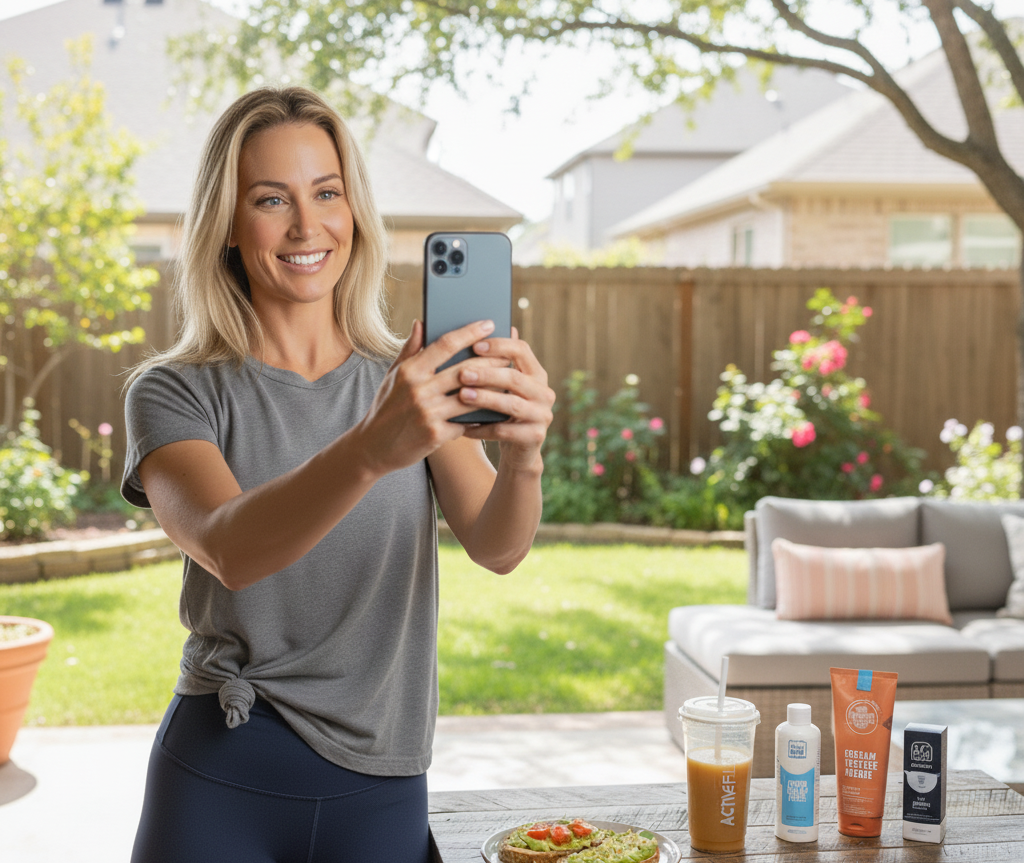
A brand just slid into your DMs asking about a collab. Or maybe you’re about to pitch your first brand deal. Either way, the same terrifying question pops up:
“What are your rates?”
You freeze.
If you haven’t prepared for this moment, it can be exciting, confusing, and nerve-wracking at the same time.
You know you want this deal, but how do you price yourself fairly without scaring the brand away?
The truth is, most creators either massively undercharge (leaving thousands on the table) or panic-quote a random number and lose the deal entirely. Neither is a good look.
That’s why we put together this complete pricing guide. By the end, you’ll have a clear formula, real rate benchmarks by follower count and niche, and the confidence to negotiate deals that actually reflect what your content is worth.
Let’s break it all down.
TL;DR: How Much to Charge for a Sponsored Instagram Post
Quick Formula: Charge $10 per 1,000 followers (the 1% rule). A creator with 10,000 followers charges ~$100 per post; 50,000 followers = ~$500 per post.
Instagram Reels: Charge 50-100% more than static posts due to higher reach potential. A 10K creator might charge $150-$200 for a Reel.
Instagram Stories: Charge less than feed posts. Package 3-5 story frames together, typically 50% of your post rate.
Add-ons that increase price: Usage rights (+20-150%), exclusivity (+50-100%), rush deadlines (+25-50%), high-value niches like tech or travel (+25-50%).
What Is the Standard Rate for a Sponsored Instagram Post?
The standard rate for a sponsored Instagram post is $10 per 1,000 followers, known as the “1% rule.” This means a creator with 10,000 followers typically charges $100 per sponsored post, while a creator with 100,000 followers charges around $1,000.
However, rates vary significantly based on engagement rate, niche, content type, and usage rights. Instagram Reels command higher rates than static posts due to their viral potential.
How Much Should You Charge for a Sponsored Instagram Post?
The easiest way to price a sponsored Instagram post is to ask for $10 for every 1,000 followers you have. This is known as the 1% rule.
So if you have 10,000 followers, you can ask for $100 per post. 20,000 followers, $200 per post.
However…
This is just a quick “rule-of-thumb” pricing system if you have no idea where to start. Nowadays, brands care about more than just follower count.
They’re now starting to care more about:
- Your engagement rate
- Your niche (some industries pay more)
- Your content type and quality
- Contract terms like rights and exclusivity
The 1% rule is really just to give you a base to start with.
A lot of creators charge MUCH more than that, but I’d strongly advise not going lower.
Especially if you’re putting more effort into your posts.
In fact, a growing number of brands are now basing their budgets on engagement rate and average views rather than follower count alone. A creator with 8,000 followers and a 7% engagement rate can often command higher rates than someone with 50,000 followers and 1% engagement. So if your audience is small but highly engaged, don’t sell yourself short.
Also, there are different ways to price your content.
Let’s take a closer look:
Stop Being “Invisible” To The Algorithm
Steal the “Lazy AI Content System” used by 19,107+ creators to go viral without being a tech genius.
100% Risk-Free 60-Day Guarantee
The Different Ways to Price Your Instagram Reels and Carousels
There are 4 main ways to price your posts:
Flat rate, cost per view (CPV), cost per action (CPA), or an affiliate setup, or a content package.
1. Flat Rates
Flat rates are usually used for carousels or stories.
Pick a number you’re happy with, and charge that amount.
For carousels, you can use the 1% rule. But if a brand is asking for a carousel with plenty of slides, make sure you add a bit extra for your work.
I’ll get into how much you should charge for stories in just a bit, but they usually cost less than carousels, and most people package stories into a set of 3-5 frames.
Flat rates work best when you’re just starting out with brand deals and want to keep pricing simple. As you build a track record of results, you can transition to performance-based models.
2. Cost Per View (CPV)
Cost per view (CPV) is great for reels that you know will get reach.
Reels have the highest potential to go viral. In fact, even accounts with very small followings can break 1 million views.
I’m not saying you HAVE to use a CPV pricing for reels, but wouldn’t it suck to only charge $100 for a reel that gets a million views?
You’ll bring huge exposure to the brand, but in return, you only get $100.
That’s why, if you’re confident you can get the views, you can use a simple formula — say, $10 for every 1,000 views.
If you do go viral and get a million views, that’s already $10,000 for you.
Pro Tip: Many experienced creators use a hybrid model — a guaranteed base fee (so you’re never working for free) plus a CPV bonus once the reel passes a certain view threshold. For example, $300 base + $5 per 1,000 views after 50,000 views. This protects you if the reel underperforms while rewarding you when it takes off.
3. Cost Per Action (CPA) / Affiliate Setup
Cost per action (CPA) or affiliate setups are great for sales-focused campaigns.
If you’re confident you can help a brand sell its product, this can be great for you.
Most creators ask for around 5% – 30% commissions for every sale they make.
It’s also easy to ask brands for this type of setup — since every sale here is a win-win for both of you.
However, the downside of this setup is that you aren’t getting paid for the exposure you’re bringing to a brand, which can sometimes be super valuable depending on your audience.
If you go the affiliate route, make sure you negotiate a dedicated discount code or trackable link so you get credit for every sale. Some brands will try to give you a generic link that doesn’t properly attribute your sales — always push for a unique tracking method.
4. Package Deals / Retainer
Packages are great if you want to work with a brand long-term.
There’s no magic formula for pricing a package.
But if a brand is asking for 3 reels, 15 stories, and 2 carousels, you can mix and match your prices for each and come up with a package that costs slightly less than if they ordered everything separately.
Or, you could strike a monthly retainer deal, where you make something like 1 post, 1 reel, 1 carousel, and 5 stories per month for a fixed price.
Retainer deals are the holy grail for creators because they give you a predictable monthly income. When pitching a retainer, frame it as a discount for the brand (“You’re saving 15–20% compared to booking each deliverable individually”) while locking in reliable revenue for yourself.
Finding brand deals isn’t always easy.
But they’re great bread-and-butter for content creators, since they can end up becoming long-term partners.
If you’re still building your audience and haven’t landed your first deal yet, start by focusing on growth. Our guide on how to get more views on Instagram covers the exact strategies that make brands want to work with you.
Other Things That Affect Instagram Post Price
Aside from your pricing model, you’ll also want to consider:
- Usage Rights — If the brand you’re working with wants to reuse your content for their website, advertisements, or other social media channels, think about charging around +20% to +150% more than your base, depending on what they’re asking.
- Exclusivity — If a brand wants you to avoid working with competitors during the campaign period, consider asking for an extra 50% – 100% more than your fee. If not, you could miss out on big opportunities for only a standard price.
- Production / Deadlines — if a reel takes a lot of time to produce, or if a brand has a tight deadline, you can charge more. Think about adding an extra 25% – 50% depending on production or deadline demands.
Sponsored Post Rates by Following on Instagram
Maybe you just want a quick sheet showing you how much you should charge based on how many followers you have.
If that’s the case, check this out:
(I made this chart using data from TheCriqle, InfluencerHero, and other studies)
| Follower Tier | In-Feed Post (Static/Carousel) | Instagram Reel (Short-Form Video) | Instagram Story (Set of 3-5 frames) |
| 0 – 1,000 (Pre-Nano) | Gifted Product / $25 – $100 | $50 – $150 | Gifted Product / $20 – $75 |
| 1,001 – 10,000 (Nano) | $100 – $500 | $150 – $750 | $75 – $250 |
| 10,001 – 25,000 (Micro) | $500 – $1,200 | $750 – $1,800 | $250 – $600 |
| 25,001 – 50,000 (Micro) | $1,200 – $2,000 | $1,800 – $3,000 | $600 – $1,000 |
| 50,001 – 100,000 (Micro) | $2,000 – $3,500 | $3,000 – $5,000 | $1,000 – $1,750 |
| 100,001 – 150,000 (Mid-Tier) | $3,500 – $5,000 | $5,000 – $7,500 | $1,750 – $2,500 |
| 150,001 – 200,000 (Mid-Tier) | $5,000 – $7,000 | $7,500 – $10,000 | $2,500 – $3,500 |
| 200,001 – 300,000 (Mid-Tier) | $7,000 – $10,000 | $10,000 – $15,000 | $3,500 – $5,000 |
| 300,001+ (Macro/Mega) | $10,000 – $100,000+ | $15,000 – $200,000+ | $5,000 – $50,000+ |
This isn’t gospel. It’s just a quick chart showing how much the average creator in the United States charges, depending on how many followers they have.
You can use this as a baseline, especially if you’re building a package deal for a brand and aren’t planning to use a cost-per-view or cost-per-action model.
Keep in mind that these numbers reflect U.S. averages. Rates can vary significantly by country, with creators in Western Europe and Australia commanding similar rates, while creators in other regions may price differently based on local market conditions.
Sponsored Post Rates by Industry
Another BIG thing you should consider is your industry, or niche.
Because the truth is… some industries pay more than others.
A niche like technology usually has higher rates, since tech geeks are always looking to buy the latest gadgets.
However, niches like memes can be very difficult to make money from. These pages get tons of followers, but people looking for a quick laugh on Instagram usually aren’t ready to spend money, making brand deals harder to come by.
So…how much more should you charge for high-profit industries?
Here are some of the biggest niches:
Lifestyle
Lifestyle is often seen as a “baseline” when it comes to sponsored post rates. So the standard 1% rule or $10 per 1k views works pretty well here.
Lifestyle is also a great niche because there are tons of lifestyle brands you can work with, all depending on your sub-niche.
If you’re thinking about going the lifestyle route, our guide on how to become a lifestyle influencer walks you through everything from choosing your sub-niche to landing your first brand deal.
Food
Food creators typically charge about 10% more than the average niche, like lifestyle.
Remember, a viral reel about a restaurant can give it a flood of new customers. So don’t undervalue how impactful your reels can be!
Tack on that extra 10%, and make your base fee around $11 per 1,000 followers.
Fashion
Creators in fashion can charge about 20% – 25% higher than the average base of $10 per 1,000 followers.
Thousands of people buy clothes online, which is why fashion is a high-profit niche. In fact, you don’t even have to be a “fashion” influencer.
Go to any popular creator, find a post where they’re wearing a cute dress, and check the comments. Trust me, you’ll see a LOT of people asking where to get the dress.
Fitness
Fitness creators can also charge about 20% – 25% higher than average niches (like Lifestyle).
Everybody wants to be fit, even if it means spending their hard-earned money on it. And brands know this.
That’s why even if fitness creators use a base of $12.5 per 1,000 followers (25% higher than the 1% rule), many brands will be willing to pay it.
Beauty
Beauty is an incredibly competitive niche. But if you break through, you can charge up to 30% higher than the base 1% rule.
The thing about beauty is, people TRUST creators here. So if you recommend a product, expect your followers to buy it.
Brands know this, of course, so they’re happy to pay the higher rates.
Travel
Travel content creators often charge around 40% higher, so the 1% rule for them looks more like $14 per 1,000 followers.
Why?
Because most people are willing to drop a LOT of money on travel. Plane tickets can easily cost $500. Hotel stays? Another few hundred (sometimes even thousands) for just a few nights.
Then there’s travel gear like bags, cameras, and accessories — all high-ticket items that people actually research and buy after seeing them online.
That’s why travel content creators can make a lot of money. Brands are willing to pay them higher fees for the trust they’ve built with their audience.
Tech
Tech content creators are arguably the highest-paid of all, being able to charge about 50% higher than those in more general lifestyle niches.
Tech is a niche where trust is invaluable.
Not only are gadgets expensive, but tech is an industry where people do heavy research before spending.
So if you can build a loyal follower base of techy people, get ready for brands to come knocking on your inbox, offering you BIG deals in exchange for your followers’ trust!
How to Price Your Instagram Content (A Simple Formula)
After all that talk and numbers, if you’re STILL confused about what to price your content, here’s a super simple formula you can use:
I’m not saying this is the best formula. Try using it to get a rough estimate of how much you should be charging.
- Use the 1% rule to find a base rate — for example, let’s say you have 15,000 followers. Your base would be $150 per post.
- Apply your niche multiplier — let’s say you’re in fashion, which has a 25% multiplier. Making your rate $187.50.
- Include production costs — say you have to go to a location to shoot a reel, you can ask for another 25%, making your base rate roughly $234.
- List add-ons — things like exclusivity, production rights, etc. This is where you add them. For this example, let’s say there are no add-ons.
This leaves you with a base rate of $234 per post.
Pro Tip: Negotiate! This formula is just here to give you an idea. In reality, if you can prove your value to a brand, you can charge much higher than just that.
Another negotiation tactic: always ask the brand for their budget first before you throw out a number. You might be surprised — many brands have allocated more than you’d expect, especially during Q4 when marketing budgets spike. If they share their budget and it’s higher than your planned rate, you’ve just avoided leaving money on the table.
Stop Being “Invisible” To The Algorithm
Steal the “Lazy AI Content System” used by 19,107+ creators to go viral without being a tech genius.
100% Risk-Free 60-Day Guarantee
Red Flags to Watch for in Brand Deals
Not every brand deal is worth taking. As you start getting offers, watch out for these common red flags:
“We’ll pay you in exposure.” Unless you’re brand new and genuinely want the portfolio piece, exposure doesn’t pay bills. If a brand has a marketing budget for ads, they have a budget for creators.
Unreasonable usage rights. Some brands bury perpetual, worldwide usage rights in their contracts, meaning they can use your content forever, anywhere, for any purpose. Always negotiate a time limit (30–90 days is standard) and charge accordingly for extended use.
No written agreement. Never start work without a signed contract or at minimum a detailed email agreement covering deliverables, payment terms, timeline, and usage rights. Verbal agreements are not enough.
Payment “after the campaign performs.” You should be paid for your work, not for results you can’t control. It’s fine to include performance bonuses, but your base fee should be guaranteed regardless of how the post performs.
Asking for too many deliverables at a “discounted” rate. If a brand wants 5 Reels, 10 Stories, and 3 carousels but only wants to pay what a single Reel costs, that’s not a discount — it’s exploitation. Always price each deliverable individually, then offer a genuine package discount of 10–20%.
Ready to Start Making Money on Instagram?
Just because Instagram doesn’t pay you for views doesn’t mean making a living off the platform isn’t possible.
Once you learn how to price your content and work with brands, you can start a very fulfilling Instagram career.
Sponsored posts are just one of many ways to earn on the platform. If you want to explore all your options, our guide on how to make money on Instagram covers 6 realistic income streams you can start building today.
But before you can even reach out to brands, you’ll need to build a following first.
If you want to know how you can get followers (not just views), then read this article next, where I go over 12 ways to get followers (not just views!).
And if you want the complete roadmap for growing from zero to a profitable Instagram account, check out our Instagram Growth Strategies guide for step-by-step strategies across every phase of growth.

Max Tornow
Founder, Smartphone Freedom Lifestyle
He’s helped thousands of creators across any niche and language turn content into views, followers, and income – with or without showing their face.
Over the past decade, Max has built multiple 7-figure brands, generated over $30M through content and social media, and coached creators worldwide to grow faster with proven systems, strategy, and human support.
→ About Max Tornow
→ About Smartphone Freedom Lifestyle
A brand just slid into your DMs asking about a collab. Or maybe you’re about to pitch your first brand deal. Either way, the same terrifying question pops up:
“What are your rates?”
You freeze.
If you haven’t prepared for this moment, it can be exciting, confusing, and nerve-wracking at the same time.
You know you want this deal, but how do you price yourself fairly without scaring the brand away?
The truth is, most creators either massively undercharge (leaving thousands on the table) or panic-quote a random number and lose the deal entirely. Neither is a good look.
That’s why we put together this complete pricing guide. By the end, you’ll have a clear formula, real rate benchmarks by follower count and niche, and the confidence to negotiate deals that actually reflect what your content is worth.
Let’s break it all down.
TL;DR: How Much to Charge for a Sponsored Instagram Post
Quick Formula: Charge $10 per 1,000 followers (the 1% rule). A creator with 10,000 followers charges ~$100 per post; 50,000 followers = ~$500 per post.
Instagram Reels: Charge 50-100% more than static posts due to higher reach potential. A 10K creator might charge $150-$200 for a Reel.
Instagram Stories: Charge less than feed posts. Package 3-5 story frames together, typically 50% of your post rate.
Add-ons that increase price: Usage rights (+20-150%), exclusivity (+50-100%), rush deadlines (+25-50%), high-value niches like tech or travel (+25-50%).
What Is the Standard Rate for a Sponsored Instagram Post?
The standard rate for a sponsored Instagram post is $10 per 1,000 followers, known as the “1% rule.” This means a creator with 10,000 followers typically charges $100 per sponsored post, while a creator with 100,000 followers charges around $1,000.
However, rates vary significantly based on engagement rate, niche, content type, and usage rights. Instagram Reels command higher rates than static posts due to their viral potential.
How Much Should You Charge for a Sponsored Instagram Post?
The easiest way to price a sponsored Instagram post is to ask for $10 for every 1,000 followers you have. This is known as the 1% rule.
So if you have 10,000 followers, you can ask for $100 per post. 20,000 followers, $200 per post.
However…
This is just a quick “rule-of-thumb” pricing system if you have no idea where to start. Nowadays, brands care about more than just follower count.
They’re now starting to care more about:
- Your engagement rate
- Your niche (some industries pay more)
- Your content type and quality
- Contract terms like rights and exclusivity
The 1% rule is really just to give you a base to start with.
A lot of creators charge MUCH more than that, but I’d strongly advise not going lower.
Especially if you’re putting more effort into your posts.
In fact, a growing number of brands are now basing their budgets on engagement rate and average views rather than follower count alone. A creator with 8,000 followers and a 7% engagement rate can often command higher rates than someone with 50,000 followers and 1% engagement. So if your audience is small but highly engaged, don’t sell yourself short.
Also, there are different ways to price your content.
Let’s take a closer look:
Stop Being “Invisible” To The Algorithm
Steal the “Lazy AI Content System” used by 19,107+ creators to go viral without being a tech genius.
100% Risk-Free 60-Day Guarantee
The Different Ways to Price Your Instagram Reels and Carousels
There are 4 main ways to price your posts:
Flat rate, cost per view (CPV), cost per action (CPA), or an affiliate setup, or a content package.
1. Flat Rates
Flat rates are usually used for carousels or stories.
Pick a number you’re happy with, and charge that amount.
For carousels, you can use the 1% rule. But if a brand is asking for a carousel with plenty of slides, make sure you add a bit extra for your work.
I’ll get into how much you should charge for stories in just a bit, but they usually cost less than carousels, and most people package stories into a set of 3-5 frames.
Flat rates work best when you’re just starting out with brand deals and want to keep pricing simple. As you build a track record of results, you can transition to performance-based models.
2. Cost Per View (CPV)
Cost per view (CPV) is great for reels that you know will get reach.
Reels have the highest potential to go viral. In fact, even accounts with very small followings can break 1 million views.
I’m not saying you HAVE to use a CPV pricing for reels, but wouldn’t it suck to only charge $100 for a reel that gets a million views?
You’ll bring huge exposure to the brand, but in return, you only get $100.
That’s why, if you’re confident you can get the views, you can use a simple formula — say, $10 for every 1,000 views.
If you do go viral and get a million views, that’s already $10,000 for you.
Pro Tip: Many experienced creators use a hybrid model — a guaranteed base fee (so you’re never working for free) plus a CPV bonus once the reel passes a certain view threshold. For example, $300 base + $5 per 1,000 views after 50,000 views. This protects you if the reel underperforms while rewarding you when it takes off.
3. Cost Per Action (CPA) / Affiliate Setup
Cost per action (CPA) or affiliate setups are great for sales-focused campaigns.
If you’re confident you can help a brand sell its product, this can be great for you.
Most creators ask for around 5% – 30% commissions for every sale they make.
It’s also easy to ask brands for this type of setup — since every sale here is a win-win for both of you.
However, the downside of this setup is that you aren’t getting paid for the exposure you’re bringing to a brand, which can sometimes be super valuable depending on your audience.
If you go the affiliate route, make sure you negotiate a dedicated discount code or trackable link so you get credit for every sale. Some brands will try to give you a generic link that doesn’t properly attribute your sales — always push for a unique tracking method.
4. Package Deals / Retainer
Packages are great if you want to work with a brand long-term.
There’s no magic formula for pricing a package.
But if a brand is asking for 3 reels, 15 stories, and 2 carousels, you can mix and match your prices for each and come up with a package that costs slightly less than if they ordered everything separately.
Or, you could strike a monthly retainer deal, where you make something like 1 post, 1 reel, 1 carousel, and 5 stories per month for a fixed price.
Retainer deals are the holy grail for creators because they give you a predictable monthly income. When pitching a retainer, frame it as a discount for the brand (“You’re saving 15–20% compared to booking each deliverable individually”) while locking in reliable revenue for yourself.
Finding brand deals isn’t always easy.
But they’re great bread-and-butter for content creators, since they can end up becoming long-term partners.
If you’re still building your audience and haven’t landed your first deal yet, start by focusing on growth. Our guide on how to get more views on Instagram covers the exact strategies that make brands want to work with you.
Other Things That Affect Instagram Post Price
Aside from your pricing model, you’ll also want to consider:
- Usage Rights — If the brand you’re working with wants to reuse your content for their website, advertisements, or other social media channels, think about charging around +20% to +150% more than your base, depending on what they’re asking.
- Exclusivity — If a brand wants you to avoid working with competitors during the campaign period, consider asking for an extra 50% – 100% more than your fee. If not, you could miss out on big opportunities for only a standard price.
- Production / Deadlines — if a reel takes a lot of time to produce, or if a brand has a tight deadline, you can charge more. Think about adding an extra 25% – 50% depending on production or deadline demands.
Sponsored Post Rates by Following on Instagram
Maybe you just want a quick sheet showing you how much you should charge based on how many followers you have.
If that’s the case, check this out:
(I made this chart using data from TheCriqle, InfluencerHero, and other studies)
| Follower Tier | In-Feed Post (Static/Carousel) | Instagram Reel (Short-Form Video) | Instagram Story (Set of 3-5 frames) |
| 0 – 1,000 (Pre-Nano) | Gifted Product / $25 – $100 | $50 – $150 | Gifted Product / $20 – $75 |
| 1,001 – 10,000 (Nano) | $100 – $500 | $150 – $750 | $75 – $250 |
| 10,001 – 25,000 (Micro) | $500 – $1,200 | $750 – $1,800 | $250 – $600 |
| 25,001 – 50,000 (Micro) | $1,200 – $2,000 | $1,800 – $3,000 | $600 – $1,000 |
| 50,001 – 100,000 (Micro) | $2,000 – $3,500 | $3,000 – $5,000 | $1,000 – $1,750 |
| 100,001 – 150,000 (Mid-Tier) | $3,500 – $5,000 | $5,000 – $7,500 | $1,750 – $2,500 |
| 150,001 – 200,000 (Mid-Tier) | $5,000 – $7,000 | $7,500 – $10,000 | $2,500 – $3,500 |
| 200,001 – 300,000 (Mid-Tier) | $7,000 – $10,000 | $10,000 – $15,000 | $3,500 – $5,000 |
| 300,001+ (Macro/Mega) | $10,000 – $100,000+ | $15,000 – $200,000+ | $5,000 – $50,000+ |
This isn’t gospel. It’s just a quick chart showing how much the average creator in the United States charges, depending on how many followers they have.
You can use this as a baseline, especially if you’re building a package deal for a brand and aren’t planning to use a cost-per-view or cost-per-action model.
Keep in mind that these numbers reflect U.S. averages. Rates can vary significantly by country, with creators in Western Europe and Australia commanding similar rates, while creators in other regions may price differently based on local market conditions.
Sponsored Post Rates by Industry
Another BIG thing you should consider is your industry, or niche.
Because the truth is… some industries pay more than others.
A niche like technology usually has higher rates, since tech geeks are always looking to buy the latest gadgets.
However, niches like memes can be very difficult to make money from. These pages get tons of followers, but people looking for a quick laugh on Instagram usually aren’t ready to spend money, making brand deals harder to come by.
So…how much more should you charge for high-profit industries?
Here are some of the biggest niches:
Lifestyle
Lifestyle is often seen as a “baseline” when it comes to sponsored post rates. So the standard 1% rule or $10 per 1k views works pretty well here.
Lifestyle is also a great niche because there are tons of lifestyle brands you can work with, all depending on your sub-niche.
If you’re thinking about going the lifestyle route, our guide on how to become a lifestyle influencer walks you through everything from choosing your sub-niche to landing your first brand deal.
Food
Food creators typically charge about 10% more than the average niche, like lifestyle.
Remember, a viral reel about a restaurant can give it a flood of new customers. So don’t undervalue how impactful your reels can be!
Tack on that extra 10%, and make your base fee around $11 per 1,000 followers.
Fashion
Creators in fashion can charge about 20% – 25% higher than the average base of $10 per 1,000 followers.
Thousands of people buy clothes online, which is why fashion is a high-profit niche. In fact, you don’t even have to be a “fashion” influencer.
Go to any popular creator, find a post where they’re wearing a cute dress, and check the comments. Trust me, you’ll see a LOT of people asking where to get the dress.
Fitness
Fitness creators can also charge about 20% – 25% higher than average niches (like Lifestyle).
Everybody wants to be fit, even if it means spending their hard-earned money on it. And brands know this.
That’s why even if fitness creators use a base of $12.5 per 1,000 followers (25% higher than the 1% rule), many brands will be willing to pay it.
Beauty
Beauty is an incredibly competitive niche. But if you break through, you can charge up to 30% higher than the base 1% rule.
The thing about beauty is, people TRUST creators here. So if you recommend a product, expect your followers to buy it.
Brands know this, of course, so they’re happy to pay the higher rates.
Travel
Travel content creators often charge around 40% higher, so the 1% rule for them looks more like $14 per 1,000 followers.
Why?
Because most people are willing to drop a LOT of money on travel. Plane tickets can easily cost $500. Hotel stays? Another few hundred (sometimes even thousands) for just a few nights.
Then there’s travel gear like bags, cameras, and accessories — all high-ticket items that people actually research and buy after seeing them online.
That’s why travel content creators can make a lot of money. Brands are willing to pay them higher fees for the trust they’ve built with their audience.
Tech
Tech content creators are arguably the highest-paid of all, being able to charge about 50% higher than those in more general lifestyle niches.
Tech is a niche where trust is invaluable.
Not only are gadgets expensive, but tech is an industry where people do heavy research before spending.
So if you can build a loyal follower base of techy people, get ready for brands to come knocking on your inbox, offering you BIG deals in exchange for your followers’ trust!
How to Price Your Instagram Content (A Simple Formula)
After all that talk and numbers, if you’re STILL confused about what to price your content, here’s a super simple formula you can use:
I’m not saying this is the best formula. Try using it to get a rough estimate of how much you should be charging.
- Use the 1% rule to find a base rate — for example, let’s say you have 15,000 followers. Your base would be $150 per post.
- Apply your niche multiplier — let’s say you’re in fashion, which has a 25% multiplier. Making your rate $187.50.
- Include production costs — say you have to go to a location to shoot a reel, you can ask for another 25%, making your base rate roughly $234.
- List add-ons — things like exclusivity, production rights, etc. This is where you add them. For this example, let’s say there are no add-ons.
This leaves you with a base rate of $234 per post.
Pro Tip: Negotiate! This formula is just here to give you an idea. In reality, if you can prove your value to a brand, you can charge much higher than just that.
Another negotiation tactic: always ask the brand for their budget first before you throw out a number. You might be surprised — many brands have allocated more than you’d expect, especially during Q4 when marketing budgets spike. If they share their budget and it’s higher than your planned rate, you’ve just avoided leaving money on the table.
Stop Being “Invisible” To The Algorithm
Steal the “Lazy AI Content System” used by 19,107+ creators to go viral without being a tech genius.
100% Risk-Free 60-Day Guarantee
Red Flags to Watch for in Brand Deals
Not every brand deal is worth taking. As you start getting offers, watch out for these common red flags:
“We’ll pay you in exposure.” Unless you’re brand new and genuinely want the portfolio piece, exposure doesn’t pay bills. If a brand has a marketing budget for ads, they have a budget for creators.
Unreasonable usage rights. Some brands bury perpetual, worldwide usage rights in their contracts, meaning they can use your content forever, anywhere, for any purpose. Always negotiate a time limit (30–90 days is standard) and charge accordingly for extended use.
No written agreement. Never start work without a signed contract or at minimum a detailed email agreement covering deliverables, payment terms, timeline, and usage rights. Verbal agreements are not enough.
Payment “after the campaign performs.” You should be paid for your work, not for results you can’t control. It’s fine to include performance bonuses, but your base fee should be guaranteed regardless of how the post performs.
Asking for too many deliverables at a “discounted” rate. If a brand wants 5 Reels, 10 Stories, and 3 carousels but only wants to pay what a single Reel costs, that’s not a discount — it’s exploitation. Always price each deliverable individually, then offer a genuine package discount of 10–20%.
Ready to Start Making Money on Instagram?
Just because Instagram doesn’t pay you for views doesn’t mean making a living off the platform isn’t possible.
Once you learn how to price your content and work with brands, you can start a very fulfilling Instagram career.
Sponsored posts are just one of many ways to earn on the platform. If you want to explore all your options, our guide on how to make money on Instagram covers 6 realistic income streams you can start building today.
But before you can even reach out to brands, you’ll need to build a following first.
If you want to know how you can get followers (not just views), then read this article next, where I go over 12 ways to get followers (not just views!).
And if you want the complete roadmap for growing from zero to a profitable Instagram account, check out our Instagram Growth Strategies guide for step-by-step strategies across every phase of growth.
Max Tornow
Founder, Smartphone Freedom Lifestyle
He’s helped thousands of creators across any niche and language turn content into views, followers, and income – with or without showing their face.
Over the past decade, Max has built multiple 7-figure brands, generated over $30M through content and social media, and coached creators worldwide to grow faster with proven systems, strategy, and human support.
→ About Max Tornow
→ About Smartphone Freedom Lifestyle
Limited Offer
Feel Like Your Content’s
Invisible Online?
1-on-1 coaching. Personalized Content Strategies & Viral Techniques & Templates designed for today’s algorithm.
Join 2,000+ content creators proving it’s never too late to breakthrough online.